Vault: Fauna of the Cloistered Lands
Added 2017-11-30 07:02:08 +0000 UTCJust a little Vault tidbit for you all! Bonus Pairing Early Bird up tomorrow!
The Cloistered Lands, being a world full of bizarre fey and demons and daemons and undead and a weirdly diverse pool of creatures calling themselves "goblins", have a surprisingly narrow range of animals we would term "fantastical". One might expect, looking at the massive range of seductive plants and fungi—not to mention the numerous sapient humanoid species such as human, dopterine, goblin maid and skittergoblin—that the same would hold true for the world's fauna.
But in reality, the evolution of the Cloistered Lands' fauna is heavily divergent, for a few reasons outlined below.
Reason #1: The White Barrow, God of Bitter Survival, Murderous Gluttony Without Malice, Trophy Killing, and the Forest Beasts
The Cloistered Lands were built by, on, and arguably for the gods—evolution always had to sort of sit back whenever they got involved. Due to the competitive nature of the animal kingdom, only a single beast god actually exerted any major control over the animals. The reasons for this are complicated and disgusting.
This god, The White Barrow, was essentially a gigantic castrated boar covered in other animals' bones. The seductive nature of much of the Cloistered Lands simply held no interest for him.
Additionally, it is a fact that most boars, though there are exceptions, are extremely uncreative. The White Barrow just created animals he was personally familiar with.
Reason #2: Why Don't Cows Photosynthesize?
Over the millennia, many plants evolved to capitalize on innate magic deposits in the earth and air through special petals and roots. Most animals lacked the chemistry required to draw magic out to begin with. This was a major barrier to any sort of exploitation of magic developing among the beasts of the world.
Reason #3: It Was Not Relevant
At the end of the day, evolution takes place only in the presence of a population limiter. The apes that learned to shuffle on two legs survive when the trees die out, and the apes that didn't die out.
But most of the strange aspects of this world simply do not target beasts to begin with. Thanks to gods, fey and demons, the world is highly sapient-centric. Most fey and demon toxins only work on sapient humanoids (and sometimes some demons and fey). Most of the aforementioned plants, having absorbed magic left in the air and earth by fey, likewise only comprehend the means to hypnotize humanoids.
Certainly, humanoids can wield magic against animals—druids can control them, mages can burn them—but it is not terribly common, since magic-users themselves are far less common than simple steel. Druids rarely abuse their powers, either.
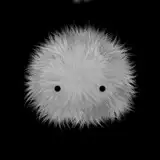
There are exceptions, naturally. There is a species of suburban mockingbird that has learned to mimic very basic "dazzling" hypnosis to steal food from humans. Water buffalo in the Sightless Deserts to the north, along the equator, can "sing" water out of the ground. And there are the goblin bears.
And then there are insects.
Insects
Wild beasts are much the same as in our world, with certain exceptions. Arthropods are a whole other story. Beasts were under the dominion of The White Barrow, but not even he could hope to manage the chittering swarms that were the Bug Gods.
The Bug Gods were of many minds—and sometimes of no mind at all—and their composite forms made them pretty much unkillable, even by other Bug Gods. As a consequence, basically anything the Bug Gods wanted, they got. Nobody else could really challenge them on it.
Mundane insects certainly exist.
So do lust bugs, which sting mortals and feed off of their need, their pleasure, their sweat, their ejaculate, their pleas for mercy, their frustration (the so-called "whimperbug" inflicts a state of crippling arousal combined with flaccidity). The most recent Toxin Ranger archives place the number of known lust bug species at 566, with an estimated thousand-or-so yet undiscovered.
So do dragon hornets, which can form enormous swarms and devour wildfires whole.
So do "mage skeets"—a very wide informal term for all the many bloodsucking bugs that drain magic from fey, mortals, and demons alike.
So do cat-toy spiders, which hypnotize catgirls with their webs and silk. There are multiple strains of cat-toy spiders, and catgirls learn very an early age the difference. Most live in horrific colonies, and many are carnivorous.
In short, the arthropods of the Cloistered Lands are every bit as diverse and strange as in our world. But there is one other major exception to note.
Bred for Strangeness
So what of the Western Wyrmswines, those fearsome winged pigs that can sniff a needle out of a haystack? What about the flying mules, those winged asses so highly prized by certain nobles?
Well, as it happens, humans are very, very good at messing with animals' genetics. And magic can do some remarkable things to a pregnant donkey.
Over the centuries of humanity's dominance, humans tinkered and tampered with glee with their domesticated beasts. Cows sprouted feathers and learned to only eat dandelions. Sheep wool turned into scaly coats that they shed every summer. Mules sprouted tiny little vestigial wings. Unicorns' horns were developed into a "homeopathic remedy". Corgis.
So in summation, if there's a weird animal in the Cloistered Lands, it's probably some weird mage's fault. Watch out for owlbears.
Comments
Corgis, formerly referred to as "tower hounds", were created as part of an effort by a Wizard Tower to create an attack dog that could not ascend or descend stairs. The idea was to create attack dogs that would be restricted to specific levels, and thus not a threat to the wizards. <a href="https://www.youtube.com/watch?v=-B93CBtHGa4" rel="nofollow noopener" target="_blank">https://www.youtube.com/watch?v=-B93CBtHGa4</a> It was a bloody failure.
Lorelei
2017-11-30 13:21:06 +0000 UTCCorgis
Latavia
2017-11-30 12:59:34 +0000 UTC