Caine's Story - Wayward Son
Added 2020-06-01 00:08:09 +0000 UTC[CONTENT WARNING: there is a description of animal death/sacrifice (the killing of a chicken) as well as one mention of the R word (referring to sexual assault). Please read at your own caution!]
The horse fair at Orlop smelled of blood and churned dirt.
The bandits that had been plaguing the northwestern territories for the past year had hit the place hard; everywhere, there were overturned carts, wandering livestock, and some slaughtered merchants lying face-down in the mud. The bandits, who called themselves “Land Pirates,” had perfected the technique of careening through festivals and trading markets and snatching up bags of coins, running through any pursuers with dented sabers or chipped spears. In their aftermath, the normally-uproarious festival grounds were grim and silent. Wan-faced merchants and stable-hands moved through the wreckage, righting splintered stalls or heaving bodies onto waiting carts.
Old Nilus, the leader of the Kinley Traders, was lifting Orlop’s tattered flag from the mud when the boy approached him.
“Excuse me, sir,” the boy said, his tone bright and fast: “I was wondering if your caravan was going to be moving on any time soon.”
Nilus barely spared him a glance. He brushed down the stained folds of the flag with a worn hand. “’Course we will,” he answered roughly. “What’s there to stay for? All the good tradesmen’ve packed up and moved on.”
“Are you heading West?”
Nilus looked up sharply. “What’s it to a young weed like you?”
The boy was unfazed by his brusqueness. He was small, copper-haired, ruddy from work in the sun—his hands had the look of an apprentice’s, but his eyes were bright like a scholar’s boy’s. There was something… alert about him, though eager in that childlike way; but his face was more perceptive than usual, and apt to turn wary, as if he could spot a liar in a heartbeat—and half-expected one at all times. The cut and dye of his clothes told Nilus that he’d come from Kinley, the home base of his own Traders.
Nilus, his curiosity piqued, remarked, “You’re not from around these parts.”
The boy shook his head. “No, sir. I’m from Kinley.”
The trader snorted and tossed the flag onto a nearby cart, which was collecting salvageable pieces from the wreckage of the bandit raid. “So? What’s a Kinley boy want with a caravan going West?”
The boy grinned. “So you are going.”
“I don’t like chitchat,” Nilus remarked loudly, turning and stalking off towards the stables. “No games, no banter. Just give me answers, boy.”
“My name is Caine,” the boy answered, still unfazed. He jogged to catch up to the old man’s longer strides, speaking so quickly that he ran out of breath. “Caine Tavadon. My mother and I came to Orlop to buy supplies, and now we want to head West, to Lindell. We thought it would be safer if we could find a merchant ‘van to travel with, given how wild the land between here and Lindell is.”
“You going to pay us?” Nilus asked roughly.
Caine blinked. “No, sir. We haven’t got much coin—but I can work. I’ve been working with the ‘vans since I was ten, traveling all over. I can saddle horses, brush ‘em, feed ‘em, do account books and math, chop wood—”
“How old are you now?” The boy looked around ten, which made his boast of working much less impressive.
“Nearly twelve, sir.”
“Well, which is it? Eleven or twelve?”
The boy paused. “Eleven, sir.”
Nilus snorted. So he’d been working only a year. But despite himself, the old man was reluctantly, begrudgingly impressed. There were not many children nowadays working so young, at least not with the traveling caravans. Most took apprenticeships in the cities, close to home, where they could return to their parents and sleep under their own roofs at night. A year of apprenticing on the road gave one the same amount of experience as apprenticing for three years in some bakeshop down the street.
“We’re no bodyguards,” Nilus told him then. “If there’s danger, we expect everybody to look out for themselves; there’s no coddling in this train. Everybody’s got to pitch in their share.”
“I can fight,” Caine said defiantly. “I’ve got a knife, and I’ve been trained in the sword.”
Nilus snorted. He could tell this second part was a lie—or, more accurately, a child’s fantasy—but he let it pass. “I’m not talking about no rich man’s fight, boy. There’s no rules in the wilderness between here and Lindell. Someone comes at you with a blade, they’re not going to do any fancy footwork—no, they’re looking to gut you, and you’d better be ready to gut them first. Can you do that?”
Caine raised his chin, though the tips of his ears reddened. “Yes, sir. I can do anything I need to, sir.”
Nilus grunted without answering. He was already saddling his horse, who nickered in the gloom of the stables. Caine watched him with a look of increasing desperation.
“We can pay, if we have to,” he said after a moment of silence. “I know I said we don’t have much, and it’s true. But if we can travel with your ‘van, it’d be worth it.”
“Tch,” said Nilus then. “And where’s the money from? Your mother and you been stealing?”
The boy seemed to shudder, but when Nilus looked at him he saw only his thin mouth set in anger. Suddenly his face seemed old beyond belief, and blazing with some kind of passionate hatred.
“It’s our money,” Caine said tightly. “Ours alone.”
Nilus hesitated. “And why are you heading West?”
The dark eyes flickered. “That’s our business. Sorry, sir. But I promise—we pose no danger to your group. Nothing like that. We just want to travel with you until we’re in sight of Lindell.”
There was a long silence after that. Nilus finished brushing down his horse and leapt into the saddle with the nimbleness of a man thirty years younger. He sat atop his mare, staring absently out into the heavy grey fog that was beginning to weave its way through the broken stalls, the dark wet streets.
“You know where our carts are?” he asked finally.
Caine’s nod sent little pearls of fog-moisture flying.
“We move out at dawn,” Nilus grunted, nudging his horse with his boot heel. “If you’re not there in time, we’ll leave without you.” His gaze flicked sideways, grey and strangely knowing. “And you’ll have to pull your weight. You’ll brush the horses, feed them, and whatever else needs doing. Understand?”
Caine’s eyes were large and eager; he was grinning. “Yes, sir. Thank you, sir!”
Nilus shook his head, hoping he wasn’t making a poor decision. “And beware, boy: the road from here on out is dangerous. I’ve heard stories, of late—not just the bandits, which we can fend off easily enough, but monsters out in the wild, attacking travelers. Like the demons of old.”
“We can handle it, sir,” Caine said firmly. “Demons don’t scare me.”
Nilus snorted and moved off into the gathering mist.
#
The next morning, the boy and his mother were waiting by Nilus’s wagon several ticks before sunrise. He ambled out of the curtained darkness of the cart with his tin mug in hand, heading for the communal campfire with the coffee pot, but stopped when he noticed them in the cold and darkling gloom. Caine was standing there, straight-backed and shifting from foot to foot, holding the reins of a stout mare and a skittish-looking pony. Behind him was the cloaked, slender figure of the woman who could only be his mother.
Nilus cocked a brow at them. “Pleased to meet you, ma’am,” he said. He made a little gesture of respect, flicking his fingers at his temple and his breastbone. “Tavadon, the boy said.”
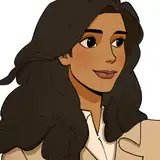
“Oleandra is my given name,” she answered. Her voice was low and pleasing, like water lapping over smooth stones. When she pulled back the hood of her cloak, Nilus caught a glimpse of a soft, vulnerable mouth and remarkable blue eyes, framed by thick lashes. She had a thick tumble of hair the color of warm and polished wood; in the bluish shadows of the morning, her skin was so pale it was nearly translucent.
No good, Nilus thought grimly. Much too frail to make a trip like this. Too pretty, too. She’ll be used to servants, and being waited on. She looks like she’s never been dirty in her life.
“We’re very grateful to you,” Oleandra said. “And we won’t be any trouble.”
Beside her, Caine was silent. His watchful eyes seemed to warn Nilus: Don’t renege on your promise.
Nilus shook his head. “It’s good to see that you have mounts already, miss. We have a spare cart, mostly used to keep extra supplies, but if you clear a space, you and the boy will be able to sleep in it.”
She inclined her regal head. “Thank you.”
When he had moved away, grumbling for his coffee, she turned to Caine and smiled. “You see? I told you things would go well.”
Caine handed her the reins to the pony. “Yes, Mother,” he said dutifully, expressionless.
That first day was harder than either of them expected. The caravan moved at a slow pace in order to keep formation, but they traveled long and hard, trudging over the scruffy, arid ashlands between Orlop and Kaikura, which they would not risk stopping in. Grit puffed up in hot little clouds, and before noon both mother and son sported stinging eyes and chapped lips. At lunch, they stopped for food, but Caine and his mother only had a little water and bread; they had underestimated how much they would eat each day traveling to Orlop, so they were careful about rationing their supplies for the rest of their journey.
Some of the other travelers in the caravan came to meet with them as they sat and ate. Mostly the men were interested in Oleandra, to the resentment of the merchant wives and wandering women who were among the convoy. Hardly anyone took notice of Caine, besides Nilus. There were no children in the group.
“Where are you headed to?” one of the bearded traders asked. He was a meat merchant who smelled constantly of an overbearing saltiness, as if he had waded into the ocean and neglected to wash his clothes afterwards. When he had first wandered over, he had handed Caine a strip of jerked beef that Caine had nearly chipped his teeth on.
“We’re going West,” Oleandra replied primly. “To Lindell.”
The meat man whistled, and a little ripple of consternation went through the crowd of onlookers. “Lindell! That’s wild country, that: the ass-end of the frontier, I always say! What business do you have there?”
“Personal business,” was all Oleandra would say. Beside her, Caine’s face had closed up like a drawbridge sealing a fortress.
They traveled again until sunset, when the sandy dunes far to their right began to turn bloody and red from the dying sun. Caine and Oleandra quickly learned the routine of the caravan: the merchants moved the wagons into a wide circle and stabled one horse at the front of each wagon, so that the horses couldn’t be stolen easily or all at one time. Then they lit individual fires in front of their carts, with one large communal fire in the center for those who had the privilege of eating from Nilus’ pot. Somehow, the fires were smokeless.
“Fire spells from Capra,” Nilus explained as he helped set up the Tavadons’ little flame. Despite his warnings that no one would help them, he had watched Caine struggle with a match and some truly pathetic kindling for over an hour before taking pity on the family and stepping in to help. It helped, too, that Oleandra had slipped him a silver lyss for his trouble. This was interesting to the merchant leader: even though he did believe they truly had a paltry amount of money with them, Oleandra was spending it behind her son’s back with some abandon—as if she wouldn’t need it once they reached Lindell.
“Aren’t those expensive?” Caine asked, watching Nilus closely at a crouch with his keen eyes. Nilus could tell that the boy was memorizing his movements, the way a clever bird memorized how its keeper opened its cage.
“Aye, expensive,” Nilus admitted, cracking the little orange orb over his neat pile of wood. “But well worth it—the fires they make don’t give off smoke and can only be seen from nearby, so we rarely get troubled at night. It makes sleeping easier.”
Caine nodded, impressed, and even smiled a little when the fire shot up with a merry little whoof. He didn’t see when Oleandra gave Nilus another coin; only noticed that the ‘van master sent Ebert, the meat merchant, to give them tin plates of hot rabbit stew and loaves of crunchy, cheese-stuffed bread. Caine wolfed it down, eating so quickly that the stew didn’t even have time to burn his fingers. His mother shot him a disapproving look and sipped slow and daintily at her plate.
When the merchants began to extinguish their flames or lift the flaps of their wagons, Oleandra and Caine turned to the little borrowed wagon that Nilus had given them to sleep in. Within were crates and barrels of all sorts of miscellaneous supplies: eating utensils, spare hay for the horses, pickled vegetables and salted meats. It smelled faintly of damp wood and flour inside.
Caine dutifully shoved aside some of the boxes to make room for a thin space for their sleeping rolls, which they had also bought in Orlop. He wanted to ask if his mother had ever slept under such circumstances before—they had only slept in inns up until now—but he did not dare to; it was one of those things she wouldn’t answer. So he said, “Good night, Mother,” and Oleandra smiled and ran her fingers through his curly hair. They laid down, Caine wedged towards the end of the wagon, Oleandra’s bedroll at his feet.
Neither of them spoke. Caine lay in the oppressive darkness of the wagon, unable to sleep; he stared through the slats in the roof and tried to pick out the stars. Growing up, he had never seen much of the stars: their house in Kinley hadn’t had any sunroofs of the kind that were common in the East, and he was never allowed to stay outside late enough to gaze at them at his leisure. It was only when he’d left home, intent on joining the ‘vans and making enough money to send back to his mother, that he’d discovered the joy of sleeping under the “heavenly dome,” as he’d heard one scholar call it; the exhilaration of racing his horse down a hill with no one to tell him to slow down, the fun of bathing in icy streams and chasing rabbits down with the hunting dogs for dinner.
But of course, he had never explained any of this to Oleandra. And perhaps that made it his fault, what was about to happen: she thought his working was a terrible hardship on him, a kind of servitude he’d sold himself into so she wouldn’t have to break her back supporting them (when she herself had no working skills). She thought she had sacrificed her own son to the great industrial machine for enough coin to keep their home.
Maybe that was why she was so determined to marry Lycoris: because Caine hadn’t had the heart to tell her he’d actually enjoyed working.
Or that he had enjoyed being away from home.
Sometime in the night he heard his mother get up softly and step out of the cart. He lay still and waited for her to come back, but her footsteps outside carried her around the wagon and away—towards Nilus’ wagon, he thought. He pulled his blanket up to his chin and tried to count the stars again.
#
He dreamt of his father, though he had never known or met the man. In his dreams, Caine’s father was something of a monstrosity: a strange figure cobbled together from bits and pieces of people Caine knew in real life. The lean torso of that young widowed farmer who’d moved in down the street with his five children. The scarred forearms of a Ket sellsword he’d glimpsed once in a tavern. The face was always a mystery, either blurry and indistinct or clay-like, generic, imitative of no one in particular. Caine knew he should be frightened of this visage, and would be in daylight—the priest his mother had made him talk to had said he was describing an Endarkened—but in dreams he was only contented and at peace.
In his dream his father turned to him, blurrily, and said, “It’s all right, Caine, if your mother marries someone else. We were never married, and it ruined her. She deserves happiness now.”
“But what about me?” Caine asked, knowing that he sounded selfish and hating himself for it. “I don’t want someone else to be my father. I want you.”
“It’s no use,” his father replied. “You can’t have a dead man as your father. It makes no sense. Not unless you’re dead, too.”
#
When Caine woke up, sweating, it was still dark through the slats of the wagon roof. His mother was back in her bedroll. Nilus was standing at the entrance of the wagon. “Come, lad,” he said.
Caine tumbled out of the wagon, bleary-eyed and tousle-haired. Dawn was just creeping over the mountains, its rosy fingers splaying out against the blanket of the waning night. He saw that the travelers were already banking the breakfast fires, stowing away supplies, and felt a hot flush of shame that they had slept straight through the start of the day.
“I didn’t mean to sleep so late,” he said to Nilus, tripping over his words. “Usually I don’t—”
The old man waved him into silence. “It’s no matter. There are still some things to attend to before we leave. Come.”
He led Caine to another wagon, one of the ones where they kept the livestock. There were coops of chickens here—Caine had seen the merchants letting them out into a little stockade to graze and stretch their legs—and he smiled as one opened its eye grumpily at their approach.
Then Nilus opened the coop of another—a scraggly rooster—and dragged it out by its leg while it screamed in protest.
He thrust the dangling rooster at Caine. “You ever kill one of these before, boy?”
Hesitantly, Caine nodded, eyeing the rooster with pity. In the previous ‘vans he had worked for, he’d had to take turns with the other apprentices, butchering chickens or rabbits or even deer caught for their dinner. He never liked it, always had to squeeze his eyes shut when he wrung the birds’ necks—but he had done it. He could do anything that was asked of him, provided he had the time to work his nerve up.
Nilus raised a brow at him. “You got a knife?”
Obediently, Caine drew his little penny knife in answer.
Nilus accepted it and sliced open the chicken’s throat.
Caine jumped back, startled, as blood began to spatter onto the ground. Seemingly out of nowhere, a few men and women watching began to sing and chant: one man beat a hand drum.
All of them cried, “To the One-God! To the One-God! To the one and only true god!”
Caine looked around, alarmed, as they kept up their chant. As the chicken’s blood pooled against the dirt, the traders whooped and sent up their prayers: for the ‘van’s safety, for their own health, and for prosperity.
After, when it was all over, Nilus handed the bloodied, dead bird to Caine and said, “Now we bury it, so’s the wolves can’t get at it.”
Caine used a spade and his hands to clear a hole in the red, clay-like earth, carefully burying the chicken in its little grave. He placed a heavy rock over its resting place as Nilus said, “The One-God likes sacrifices: they talk about it in the Doctrine of the One. Sacrifices attract xer attention, see, and earn xer protection and favor. You can’t expect xer to shield you from harm for no reason; you’ve got to earn it. Offering up sacrifices is a fair trade for xer protection.”
Caine nodded; he supposed this made sense. Though he’d thought that the One-God was—he’d forgotten the word: beneficial? Brave? Benevolent? Yes, that was it, benevolent—and loved everyone unconditionally. That was what his mother had always said, anyway. But he supposed it also made sense that xe required things from xer children. Even he knew that few things in life came free.
“Once a sennight,” Nilus said, “it’ll be your job to make the offering to the One-God.” He eyed Caine beadily, speaking gruffly. “It’s an important duty, boy; the safety of the ‘van relies on you doing it.”
“I can do it, sir,” Caine said, warmed by his trust and regard.
Nilus nodded in approval. “Good.” Then he said, folding his arms and looking off into the distance as Caine washed his hands in a nearby bucket: “Your mother told me why you’re going to Lindell. She’s going off to marry a rich man, is she?”
Caine stared down into the water bucket, now clouded pink, and said nothing.
“Lycoris Kinpol.” Nilus sounded the name out with disdain, as if describing something he’d found stuck to the bottom of his shoe. “The lord-governor of Lindell himself. You’re joining a powerful family, boy.”
“I didn’t think she’d tell you,” Caine said then, unhappily. “I thought we were supposed to keep it a secret. It’s dangerous for people to know.”
Nilus waved his hand. “She wanted to be sure I don’t just leave the two of you out in the middle of nowhere,” he said. Then he frowned at Caine. “Gives me cause to wonder, though: if it’s true, why would the lord-governor make the two of you travel alone? If your mother’s really marrying him, wouldn’t he send an entire convoy to escort his new bride to him?”
Caine frowned. He had often wondered this himself.
“Ah,” Nilus said, tapping his craggy nose. Caine wasn’t sure if he was talking to himself, or explaining things to Caine in a roundabout way. “But if you and your mother are common-born, beneath his station, mayhap he’s testing her. Making her prove her love for him. Anyone can accept a high-born lord’s proposal if he sends a feathered chariot to bear them away—if they come to him using his coin. But if she comes on her own, come Hael or highwater, going through hardship, and struggling to get by on her own… perhaps she truly loves him, and doesn’t care so much for his gold. She isn’t taking advantage of him, but truly wants to be with him.” He glances at Caine shrewdly. “That sound about right?”
Caine looked back at the bucket; his reflection in the bloodied water. “I don’t know,” he said quietly. “I’ve never met him. I don’t even know how they met.”
He’d returned home from one of his long trips with another merchant ‘van when his mother had informed him of the news. Before he even knew it, their home was sold, preparations for the wedding in Lindell was underway, and he was put in charge of seeing the two of them safely to the westernmost city in the Autarchy.
It had to be him, too; they didn’t have the money to hire their own guide, and he was the one with the experience.
Nilus, looking at Caine’s expression, said with just a note of sympathy in his gruff voice: “I hope he’s kind to you, lad. There’s not many noblemen who would take a common woman and her son. He must love her.”
It was something that had been said a lot about this subject: he must, she must, they must. All, by nature, guesses and assumptions: his mother was not forthcoming enough to make it “she is”—and again, he had never met his future stepfather.
Nilus clapped him roughly on the shoulder and turned away. “Come,” he said. “We should get the ‘van going.”
Within the hour the caravan had set off again, rumbling past the ever-present line of distant sand dunes that guarded the first edges of the Jalis desert. Behind them, the ashlands receded into a distant gray patch of earth; looking back, Caine felt a little pang for his home country. He was not homesick, exactly—that would be hypocritical, given how content he’d been to travel far and wide as an apprentice—but he did wonder if they would ever return together to Kinley. Had his mother notified their neighbors, his friends, his former teachers of their leaving? Or would it be as if he and Oleandra had simply vanished into the ether?
They were trudging through scruffy grassland now, and every so often he caught the glimpse of a hare bounding through the long grass, or the sleek figure of an ahfuri and its rider leaping across the plain. At noon, they passed a mail caravan, one of the delivery trains that circled the Continent on a six-month circuit. The leader of the other caravan shouted, “Ho!” and Nilus raised his fist in a gesture of greeting. Both ‘vans stopped.
“Hail, Nilus of Kinley,” the mail caravan master called cheerfully. He was a Norm, but some of the other wagon-drivers behind him were of a different stock: they wore strange clothes, and their eyes were bright and foreign. Caine stared at them. Raised in the heart of the old Norm kingdom, he hadn’t encountered many foreigners or Diminished, though he had learned about them in school. Who were these riders? Mages? Ket? Elves? A group of elusive Changelings?
“Hail Osric of Leore,” Nilus answered in turn. “Where are you riding from?”
“Kinley,” the other man said. Caine felt a hot surge of anticipation up his spine. “Riding up to Sorano.”
“Steer clear of Orlop,” Nilus said. “We were just there. There’s naught but bandits and those damned Land Pirates up in that city.”
“It can’t be any worse than Kinley,” Osric answered dryly. He jerked his head back toward the line of iron hills that marked the road to the South. “Some crime lord’s tearing up the city. He caught wind that someone there’s meant to be the wife of a powerful man in the West, some western lord. He’s got an army of mercenaries and even bribed city guards hunting for her, to hold her for ransom. I hope the poor soul’s gotten away, or has someone to trust. The whole city’s upended, looking for her.”
Caine went stiff; his shoulders ached from the sudden tension. He looked at Oleandra, behind him on the ‘van line: she had drawn her hood up over her face. She was white and still, her knuckles tight on the reins of her pony, but her eyes gave away nothing. Caine, on his part, began shedding damp coats of sweat. The ‘van master had to be referring to his mother. But what was this about a ransom? And mercenaries?
Nilus’ bristling eyebrows rose into his hairline. “Ransom, you say,” he rumbled. “That’s bold of this crime lord. He’d risk incurring the wrath of the western lord?”
“Well, Lindell and Kinley are so far apart,” the other ‘van master replied. “I’m sure he figures even a lord doesn’t have the power to reach him in Kinley.” He scratched his neck. “It seems to be a grim affair. The lord’s a favorite of the Autarch’s, so he’s got gold. Enough to pay any ransom for his bride. So the crime lord’s put up his own reward for anyone who can give him the whereabouts of his would-be bride.”
“A reward, you say?” Nilus asked softly. “How much?”
The ‘van master answered in the same secretive tone: “Five hundred deucalions.”
It was as if Caine had been thrown into an acid bath, a numb, raw coldness suddenly gnawing at his bones. Five hundred deucalions! It was enough to buy a palace fit a king—no, an entire duchy, at least in one of the backwater regions of the West. With that money, a crime lord would have enough to…to…
To have the entire country after them.
He felt sick. Oleandra had retreated to the end of the caravan, her sulky pony swaying at the end of the line. No one seemed to have taken notice—Nilus’ conversation was not within earshot of many—but Caine had the sudden thought that they would be turned over in a heartbeat if anyone else knew. He stared hard at Nilus’ back, but the man was already bidding Osric farewell.
“Be wary up in Orlop,” he was saying. “As I said, nothing but thieves and bandits up in those parts. Too close to the desert.”
“Nobody wants to rob a mail ‘van,” Haktal answered confidently. “And you be careful making the crossing past Kaikura.” He glanced at the line of wagons and lowered his voice. “Aside from those Diminished, strange beasts have been waylaying travelers off the road. I haven’t encountered any myself, but they say that the Enemy is stirring up mischief again.”
“Bah,” Nilus said, and made a rough gesture to his riders. In moments the two convoys had passed each other and were rumbling their separate ways; Caine twisted in his seat and watched as the mail caravan thundered up a grassy hill and vanished.
Nilus gave no sign that the other ‘van master had said anything that perturbed him. He sat at the front of his cart, whistling, and when Oleandra came back to their place in the line, trotting just behind him, he did not look back.
Caine stared at him and thought, If he tries to do anything, we’ll have to leave. He can’t follow us, not with all these great galloping wagons to take care of.
But what do we do if we’re on our own? We don’t know how to survive out here. I could fish, but I don’t know where the rivers are.
A little bud of dread began to furl open in his stomach. And if enemies come after us, how will we get away from that five-hundred deucalion reward?
At noon, they stopped for lunch, a quick rest that didn’t involve unpacking any of the equipment from the carts. Nilus sent the meat merchant over again, this time with some kind of buttery, toasted dough filled with leeks, onions, gravy, and mutton. Caine couldn’t bring himself to eat, and when his mother was distracted with the merchant’s puffed-up attempts at conversation, he slipped away, heading to where Nilus was examining a map flattened against a low rock.
The man looked up as he approached, but turned back to his work without saying anything. It wasn’t until Caine had stood watching for several minutes that he folded up the map and sighed. “Something on your mind, boy?”
“Um… yes, sir.”
“You heard Osric, then,” Nilus remarked, his tone unchanged. He chewed on a strip of tough mutton. “Did your mother say anything about it?”
Caine shook his head. “No, sir.”
Nilus grunted, then stood up and tucked his map into one of the many pockets lining the inside of his coat. Caine had noticed that he stored a multitude of tools on his person, ready to be used at a moment’s notice. He withdrew a kerchief from one such pocket and mopped his brow, which was beginning to sweat under the unwavering noon sun. “Well, the pair of you are clever birds, I’ll give you that. You failed to mention that you had a bounty on your head.”
Caine was shocked by the implication. “I didn’t know!” he sputtered. “Neither of us did!” Though a tinge of doubt entered his mind then—had his mother known? Was that why she had made them leave the city so hastily, forbidding any farewells to any of his friends?
Nilus scratched his neck. “You also failed to mention that your father is a friend of the Autarch,” he said. “It complicates things, that.”
He left Caine waiting in agonizing silence for some time, walking over to his wagon and waiting horse while the boy followed. Finally Caine said, his voice steady enough: “What are you going to do?”
Nilus sent him an amused look. “You’re not in danger from me,” he said. “I’m not in the business of turning this ‘van around and hauling the two of you all the way back to Kinley. Not even for such a handsome reward.” He smiled, but somehow it seemed cool and menacing; his eyes, normally scrunched up and mildly cantankerous, suddenly looked hooded and keen. “But that doesn’t mean that the reward won’t cause trouble for you. People all over the West will be on the lookout for you by now. That endangers the ‘van. They’ll kill the lot of us to get at you, if they recognize you. Or they’ll kill us because your stepfather’s men will think we’re the criminals who kidnapped you.”
“So what are you going to do?” Caine said again, speaking now at a strange, airless volume. His ribs felt constricted, and he suddenly felt very small, and very alone.
Nilus paused, considering; his mare fidgeted under his gaze. “I suppose we have no choice,” he said heavily. He turned, and Caine reflexively clenched his fists. His nails bit into his palms. He thought, He’s going to kick us out. We’re going to be alone, and we’ll have to take care of ourselves, and—
“Go to Saytas, the woman in the blue cart,” Nilus said. “Tell her that I’ve decided that I don’t want you two standing out so. It attracts the eyes of raiders—they look at you and your mother, they think we’ve got coin. Tell her to disguise you better, roughen you up.” He frowned at Caine’s stare. “What is it, boy? You don’t understand?”
Caine was rooted to the spot. Slowly, the tension began to leak out of him, like air seeping out of a punctured balloon. “You’re not going to make us leave?” he asked. He stared at Nilus, and suddenly the old man was reminded just how young the boy was; Caine’s chin quavered, as if he were fighting back sudden tears. “You’re not going to make us fend for ourselves?”
Nilus frowned. “Well, that remains to be seen,” he said brusquely. “You might prove more trouble than you’re worth, and we’ll see then. But for now, go to Saytas and let her work on you.”
With a quick nod and a discreet hand dashed across his eyes, the boy nodded and muttered, “Thank you, sir.” Before Nilus could reply, he spun on his heel and marched off, shoulders sharp with suppressed relief.
Nilus sighed and turned back to his horse, lifting the flap of his saddlebag to reveal the hilt of a long, wicked knife. “Well, old girl,” he said to the mare, “I’ve done it. Can’t make them leave now. My old heart must be getting soft.” He pulled the knife free from its sheath and tested its edge against the bag, leaving a long, fine score in the tough leather. “Though hopefully not too soft to do some killing—if it comes to that.”
The horse nickered. Nilus put the knife away and went to tell the merchants to look out for any pursuers. It was not the first time that the ‘van would have to defend their own.
#
That night, two entirely different travelers joined the dinner campfire instead of the beautiful, aristocratic-looking woman and her son. This pair was a haggard sight: the freckled boy was dressed in shabby clothing and had straw poking out of his shirt and hair. The woman suddenly looked thin, bird-like; she had soot smeared over her face, obscuring her white skin, and her hair was wrapped in a thin scarf. Overall, they looked like a sorry pair.
While many of the men openly lamented Oleandra’s transformation, it seemed that the other caravaners approved of the Tavadons’ new, impoverished appearance. Greetings were friendlier, sympathy offered more openly; even a snappish woman who’d sworn at Caine seemed slightly freer with her words.
Caine felt more at ease because of this, smiling to himself as he helped the women sand the tin plates clean. It seemed the group had accepted them, at least for now; it made him feel more secure, knowing they had allies to guard them.
After dinner, Nilus posted an extra man to keep watch throughout the night. From what Caine knew, he had not told the other merchants why Caine and Oleandra were now in disguise, or even that they had a crime lord hounding their heels. He said only to expect trouble, and the other men had listened: Caine heard someone say that Nilus had never allowed a member of his caravan to die, and even if Oleandra and Caine were strangers to the ‘van, they would be protected on Nilus’ orders until he chose to cut them loose.
It also helped that Nilus had implied to others that the pair would pay handsomely for their safeguarding at the journey’s end. (He, on his part, actually believed this—it would serve as compensation for the missed five-hundred deucalions, and he was fairly sure he could wrangle out the reward from Lycoris Kinpol himself if he had to. Nilus wasn’t afraid of anyone, Caine thought.)
They made their camp on the shore of a wide lake near the foot of more rolling hills. After dinner, the caravaners sat around their little fires, arms wrapped around their knees while one family—a group of traveling minstrels—sang a few songs from the East. Their reedy, fluting voices rose like liquid into the air, and even though Caine couldn’t make out the words, he felt at peace. It was reassuring to see the shapes of the extra men patrolling their circle of wagons; it felt good to receive a few rare smiles from the other caravaners. He felt as if he could do this forever.
Ebert, the meat merchant, had been clinging to his mother’s side for most of the evening. Ignoring the singers, he bit noisily into a larkon fruit and wiped the juices from his chin.
“You see, my lady,” he said, then switched to a more familiar tone. “Oleandra. Over those hills is the city of Kaikura, a hive for some wretched Ket. They’re so depraved that even their own kind booted them out from the East. We need to steer well clear, for they are prone to robbing unfortunates blind on the roads near their lands.”
Caine looked up from plucking strands of grass by his knee. Oleandra knew far more about the Continent than blustering Ebert did, but only he and she knew that. She glanced in Caine’s direction, and he looked down, pretending he hadn’t heard; in reality, he was listening intently. His mother’s silvery voice was barely audible over the crackling of the flames when she replied: “They must have done something quite terrible to earn such an exile.”
“Oh, yes,” Ebert said, bearing his teeth in a gruesome way. “Knowing their kind, they probably pillaged, and looted, and raped—”
“That’s not true,” Caine broke in then. “The Ket are supposed to be very honorable. They take oaths, and they’ll even end their lives if they break them, and they have codes of honor—”
Ebert was looking at him in contempt. “Where’d you hear such wild stories, boy?”
Caine shut his mouth, then. Oleandra had told him these things, of course, as bedtime stories when he was growing up—but she had warned him to never disclose this to anyone, as it could be seen as heresy. He said, “I learned it in school.”
Ebert’s lip curled. “Your teacher filled your heads with fancies, then,” he spat. “Ket and all Diminished are monsters by nature, boy, little better than the Endarkened themselves. Their minds are like that of beasts and demons. If it weren’t for the Autarch’s laws, they’d kill you with a look, a thought. Their magic would snatch your soul away and devour it.” He turned away. “You’d do best to remember that.”
Caine opened his mouth to argue, but Oleandra sent him a look and shook her head. She said, with a hint of sarcasm that only Caine could detect: “Thank you for imparting your words of wisdom, Ebert.”
He glanced at her, now sporting a foolish grin. “It is a privilege to instruct the young,” he said in a humbler tone. Then he frowned again at Caine, who was staring at him with an unimpressed look. “Where’s your father, boy? Why isn’t he around to teach you these things?”
It was likely that he had forgotten that Oleandra and Caine were mother and son at all; even some of Caine’s teachers had mistaken Oleandra as his aunt or even an older sister. Caine glanced at his mother, waiting to see what she would say; when she didn’t answer, he told Ebert: “He’s away on a long trip. He won’t be back for a long time.”
It was often what he had fantasized, when he was a young child; before he had come to terms with the fact that he likely would never know the identity of his own father. He would pretend that the man was a traveler, exploring the far reaches of the world; he was a soldier, fighting a righteous war on behalf of the Autarch and missing his family terribly. He was an adventurer, an explorer, too busy to come home to see his son and wife, but discovering amazing wonders and miracles to make up for it.
Ebert snorted. “Well,” he said, glancing at Oleandra, “if he loved his beautiful wife the way she deserved to be loved, he wouldn’t be away, now would he?”
Caine made a face. So he’d remembered they were mother and son, after all.
Afterwards, the two Tavadons retreated to their usual wagon to rest for the night. Lying awake, his eyes practically burning from staring so hard at the stars, Caine said: “Did he love you?” And: “Did you love him?”
Oleandra didn’t move for a moment. Then she said wearily, “Are you having trouble sleeping?”
Caine sat up. “I never asked you before,” he said, “but I suppose it’s got to be asked now. Did you?” He hesitated for a brief moment, then added, “And do you love Lycoris?” He was surprised he had never asked her that before, either; but the news of the impending marriage had come so fast that he hadn’t had the time to think of it. And he had been left to assume.
His mother sighed and sat up as well. Her curly hair was so long that it stretched into soft waves near her waist, the ends brushing the dusty wagon floor. There was a long silence before she said, “I never meant to tell you this, Caine, but I suppose I owe you the truth—especially since I’m dragging you halfway across the Continent. Do you really want to know who he was?”
Caine went very, very still. “Yes,” he said, but his voice came out so choked that he had to clear his throat and try again. They had argued about it often enough that he’d given up questioning his mother years ago on the topic; that she was so willing to divulge the long-held secret now half-disturbed him. It felt as if it would come at some terrible cost, like a trap. His friend Tansey had said they’d given their dog a king’s feast before he’d died; this felt like that.
Caine tried to make his mouth move. “Was he…”
Then he stopped, unable to finish and heartsick. He had long since wondered if his father had been a bad man, a despicable man, and that was the reason for his mother’s silence: that she either did not want to relive painful memories or tell Caine that he was the legacy of… well, someone low and dirty, like the men who gambled in the backalleys and smelled of vomit and lacked their teeth, chasing around scantily-clad women like animals and voiding themselves in public. He dreaded hearing it; and yet he wanted to know so badly he burned with it. “Who was he?”
Oleandra didn’t answer him for so long he thought she’d fallen asleep. “When I was young,” she said finally, very slowly, as if tasting the words before she spoke them, “only a handful of years older than you now… my father—your grandfather—was the head of a great trading house. The Tavadon Syndicate. We were very great, very powerful. Very rich.”
She paused here. Caine had known this much about her past, and his own family ties: it explained why his mother didn’t know much about how to work, though she’d managed to scrape by throughout his childhood, and why she knew so much about the world. She wasn’t like the other mothers in their neighborhood, that had always been clear; where little Tansey’s mother was a laundress and a cook, and Hapstead Keen’s mother worked as a blacksmith, forging everything from war hammers and even guns, Oleandra Tavadon had always stood out as… different. High-born, as Nilus called it. Unable to do much but find work as a governess for noble children and even occasionally as a pretty face to decorate parlors at parties that had too few guests.
“I used to accompany my father all over the Continent on business,” Oleandra said then, snapping Caine’s attention back to her. She arranged her skirts neatly around her legs. “We would trade in different city-states, meet all kinds of people, experience all kinds of wonderful things.” She sighed. “But he wasn’t happy about it. It was dangerous travel, oftentimes. The roads were wild and full of bandits and beasts, just as they are now. It wasn’t suitable for a young lady. So he resolved to find a way to have me settled and out of the way.”
Caine swallowed. “So he wanted to… marry you off?” Had his parents’ marriage been arranged, then? A loveless betrothal?
“Yes,” Caine’s mother said. “To a man named Enik. A baron in the South, by all rights a minor prince.” She paused again. “When he asked for my hand—demanded it, even—I was… happy. My father thought it was a perfect match: it was rare for one of the nobility to take notice of a woman from a merchant clan, but we were powerful enough and Enik desired me enough. And House Tavadon would be made all the stronger, my father was pleased, and I thought my new fiancé handsome. But then…”
“But then?” Caine pressed, when she fell silent. Dread rose in his gut. Was he the son of this noble, Enik, then? But why had they been cast out and left to fend for themselves? Shouldn’t he be the child of a prince?
Oleandra sighed. “It was on the journey to Enik—to my wedding—that…” She faltered. “That I met your father.”
Caine held his breath as she described in halting terms what had happened. He was a mercenary guard that her father had hired to protect her on the long journey to meet with her betrothed in his home city of Leore. The details were scarce, but from what Caine gathered, Oleandra didn’t know much about the man herself; only his name, his curly, burnished-copper hair (“just like yours,” she said to him with a weary smile), and his skills with a bow and arrow. He was her bodyguard, nothing more.
“But you fell in love?” Caine asked, hushed. “Then, on that journey?”
Oleandra didn’t answer. “Afterwards…” she whispered. “He left, to go on whatever new job he’d been hired for. It was how we’d intended to part all along. And Enik… forestalled our wedding. There were complications, money that he needed to come through first. He asked for us to wait at least five months before the ceremony could be held. My father insisted on the wait, too, to ensure that my dowry would come through in full. But when the five months passed, and Enik saw that I was pregnant…”
She stopped talking for a long time. “I tried to hide you, love,” she said finally, her voice weak, as if telling the story had drained her. “I tried to wear dresses to conceal it, hid myself away from visitors for a long time… but in the end, it had to come out. You did.”
It was obvious what had happened after that, even to a boy like Caine. Enik had broken the betrothal, and House Tavadon had cast Oleandra out in disgrace, leaving her to survive on her own, stripped of her titles and penniless. That was how they’d ended up in Kinley, alone.
“But what happened to the guard?” Caine asked. “My… father? Did you ever try to find him?”
She nodded. “It was the first thing I did when I realized I was going to have you,” she said. “I sent out letters, paid good money to track him down…” Then she hesitated. “He died, not three weeks after leaving me in Leore. Some sort of attack on the road. Maybe Endarkened, maybe bandits. No one was sure.”
Her hand emerged from the darkness to touch his head. “I’m sorry, dearest. I thought it might wait until you were older, but you’ve taken on so much responsibility now…”
She trailed off, and Caine could only shake his head wordlessly, at a loss. He’d also suspected that his father was dead, if he wasn’t awful, because otherwise why would his mother keep him from meeting the man for so long? But the actual knowledge of it had turned his heart to stone, the weight of it sinking down into his gut. He could not trust himself to speak.
After a long time he said thickly, “You never answered my question. Do you love Lycoris?” And did you love my father? “Will he… will he take care of us?” Will he embrace me as a son?
There was a rustling as his mother laid back down on her bedroll. Outside, the sounds of the night—the cacophony of autumn crickets, the rustling of the evening wind—seemed to diminish into chilling silence. Oleandra, her voice a low murmur, replied, “We will be happy with him, Caine. I’m sure of that. That’s all we need to know.”
#
Over a month later, they reached Lindell. Caine stood on a clifftop overlooking the city and felt a pang of… something. He wasn’t sure what. Nausea? Excitement? Anticipation?
His new life would begin there, he thought, staring down at the dark and stony city. Everything would change. He would have a new family, servants to answer to him, money to buy whatever he wanted.
And yet he felt like weeping. But Nilus had told him, sternly, that weeping was not allowed in the ‘van, so he took a deep breath and forced back the burning in his eyes. He needed to be brave. Strong. For his mother. He was the only one she had—though he supposed that would change, too, now that there was Lycoris.
He turned back to the caravan. Oleandra was there, discussing details with Nilus, who would accompany them to Lycoris’ estate (if only to collect his promised payment). His mother smiled sweetly at Caine before turning back to their wagon to change into her bridal clothes. The closer they’d come to Lindell, the more alive she had become, her face brightening and her gestures becoming more animated over time. Her voice had grown stronger, clearer. It was obvious that she was excited to see Lycoris, brimming with eagerness to start their new life. If that wasn’t love, Caine supposed, he didn’t know what was.
Nilus eyed him, taking in his expression as Caine began to unsaddle his mare for her brushing. Then, swiftly, he reached out and laid his old, gnarled hand on Caine’s head. Caine froze; it was the first time the old ‘van leader had ever touched him.
“Your new family’s down there, boy,” he said, jerking his head down towards the waiting city. Caine could only manage a wordless nod. “There are a lot of people waiting down there for you, all set to pamper you, turn you soft like the rest of them noble brats. What’s the matter? Aren’t you happy?”
“Yes, sir,” Caine said miserably.
Nilus cuffed him lightly over the head. “Don’t be a fool, boy,” he said. “You look sick to your stomach.” Then he sighed, his faded grey eyes looking at Caine, considering him.
He leaned in close, close enough for Caine to smell the leather and beard-oil of him. “The Traders are your family, too,” the old man rumbled. “You were one of us the whole way here. You’ll always have a place with us—if you want it. Don’t think you don’t have a choice. Life is full of choices, and you’ve got to be sure to pick the right ones.” Then he straightened and patted Caine roughly on the head, as if he had never done such a thing before and didn’t quite know how to do it. “Must be getting soft,” he muttered to himself, turning and striding away.
Caine stared after him. Later, his mother would emerge from their wagon, a resplendent vision in white with tiny flowers braided through her hair; and they would go down, down, down the path to the city together, towards whatever horizon waited for them. He was used to horizons; he was always looking at them, wondering what lay beyond what he could see. He liked to contemplate them as much as he did the stars.
He could see what laid beyond this horizon now; he saw his future, and he saw it clearly. It was a straight, clear road in front of him.
And yet Caine, for all his wandering, had never felt more lost.
“Where are you going next?” he asked Nilus, walking on numb legs as they trailed Oleandra on her decorated horse into the city. “Where will the ‘van go now, I mean?”
Nilus looked at him knowingly. “All over,” was all he said. “We’re wanderers, boy; we ain’t got a road laid out in front of us. We just… are.”
Caine smiled to himself, thinking of his father. “That sounds like the best road of all.”
Comments
Hello. I am crying. Goodbye.
snowthornes
2023-10-01 11:07:30 +0000 UTC<3
Ezzi
2022-01-28 12:24:18 +0000 UTC