Line (may not) go up: Exploring NFT Anime Shinobanai! Crypto Ninja Sakuya
Added 2024-11-10 04:19:39 +0000 UTCAuthor: Borealis Capps
Editor: Samantha Ferreira
Note: All Ethereum prices in this article were estimated at as of 5:00 PM PDT on October 9, 2024 unless otherwise stated.
In the year 2024, there’s a good chance you’ve heard of non-fungible tokens, or “NFTs.” These digital products, which are basically the digital equivalent of CVS receipts, were pitched as the future of art, music, and even meme culture in the early 2020s. Today, though 96% of all NFTs are dead and the world is better off without these environmentally catastrophic boondoggles clogging up social media timelines and cringeworthy talk show spots.For a brief moment, though, people who didn’t understand how copy-pasting worked and people desperate for quick cash captured the zeitgeist, as countless companies promised an NFT-based future that basically no one wanted to live in. Rugs were pulled, people lost millions of dollars, and within a couple of years, the very idea of NFTs was considered poisonous to include with any product.It may sometimes seem like Japan is the only country that never got the message, though. In 2022, former Japanese Prime Minister Fumio Kishida promised that that Japan, “will develop an environment for the promotion of web 3.0, such as blockchain, NFTs and the metaverse.” Meanwhile, video game giants like Square Enix continue to roll out strategies that focus on NFTs, rolling out high-profile projects like Symbiogenesis. Textbook companies like Tokyo Shoseki have similarly leaned into NFTs to advertise new VTuber projects based on popular character Ellen Baker. Even well received anime and manga like Lycoris Recoil and Kindaichi Case Files cannot seem to escape the NFT menace.
Et tu, Kizuna AI?
A few companies dipped their toes into the idea of an NFT anime, but most never picked up steam. In December 2021, though, VTuber Kizuna AI announced that she would go on indefinite hiatus in February 2022. In the announcement video, she stated that she would keep connected with her fanbase through the metaverse and NFT sales. AI’s digital corpse was exhumed a year later to more overtly shill NFTs in the Kizuna no Allele anime. The series was promptly laughed out of the room in the greater anime fandom, largely being considered one of the worst shows of Spring 2023. Toei Animation looked like it might beat the dead NFT horse a bit more when they promised to create an anime based on the NFT project Zombie Zoo, which was created by a nine-year-old child who goes by the pen name “Zombie Zoo Keeper.” The project turned out to only be a one minute short promotional video, though. Indeed, the only notable exception to the rule of NFT anime failures comes from one project that has seemingly beaten all the odds and to actually become successful: Shinobanai! Crypto Ninja Sakuya.

Attack of the Crypto Ninjas
The announcement of Shinobanai! Crypto Ninja Sakuya’s first season being slated for an October 2023 premiere did little more than elicit confusion among western fans. Mainly, people asked why an NFT-based anime was still being produced so long after the bubble had burst. No streaming services picked up the show outside of Japan, so unless viewers were firing up VPNs to watch on Amazon Prime’s Japanese service, or were somehow tuning into TOKYO MX from their respective countries once a week, there was zero chance they’d actually interact with the series. In the fan community, the series failed to garner enough interest to receive a fansub, making it inaccessible to most even by illicit means.While most of us weren’t looking, though, "the world's first television anime series for NFT characters" has managed to become a surprisingly successful anime franchise. In the past year, the project inspired a stage performance, city collaborations, and a second season in Winter 2024. Most recently, it was announced that the third season of the anime would air in 2025. Even the CryptoNinja NFT project only expected one season to be aired, but the show somehow became popular enough for it to be shown as reruns, giving it a year-long broadcast life.
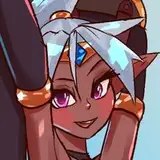
Shinobanai! Crypto Ninja Sakuya diverges from projects like Red Ape Family and Crypto Anime Babes by not focusing its content on cringeworthy community in-jokes and proselytizing for the blockchain. This likely contributes to its success, as the end product isn’t torturous drivel that is destined to age poorly, like its contemporaries. Outside of the “Crypto Scrolls” featured in its story and its title, it would be easy to miss that the series was related to NFTs at all, for those not in the know. Shinobanai! Crypto Ninja Sakuya’s cute enough, albeit bland concept has viewers following the contradiction that is Sakuya, a ninja who wants to be an idol. She and her friends get caught up in a ninja free-for-all, as an evil force tries to reunite all four Crypto Scrolls and release a dangerous technique upon the world. Each episode runs for five minutes, so it doesn’t overstay its welcome. And, while I am loath to admit it, Shinobanai! Crypto Ninja Sakuya does have a slightly catchy theme song. It’s nothing groundbreaking, but it’s absolutely a watchable little distraction that could have found minor success in the west if it wasn’t plagued by NFTs.
The Tragically Successful
Funding a full anime production would have been little issue. When the anime’s airing time was confirmed, CryptoNinja NFT claimed to have earned 15,000 Ethereum on the project, or around $28 million USD at the time. Those initial funds might have made it more attractive to other investors like Tokyo Otaku Mode, Tsucrea, and The Battle, who eventually joined the project as well. They raised even further funds using even more NFTs with the project’s initial Lab Member Passport and Shuriken offerings, bringing in an estimated $117,755 and $121,225 USD, respectively. Fans who backed the passport were promised small merch packs for their early support.

One of said merch packs
The project would continue to make money as it aired. The special NFTs shown at the ends of episodes alone brought in an estimated 30.9059 Ethereum, or around $73,255.64 USD. Hopefully, that cash was worth it, though, for a chance to win a signed script from the show. Multiple video games have tie-ins with the show and its characters that, of course, had purchasable items connected to the blockchain for just 0.04 ETH, or $98 USD apiece! It becomes clear when tossing in the expected acrylic keychains, stickers, and other similar products that Shinobanai! Crypto Ninja Sakuya is doing a great job of pulling in cash from core fans. With most NFTs having negligible production costs to generate, this is likely the kind of revenue stream shows reliant on physical sales to get by could only dream of.Season three is set to include parts of a related NFT Project, CryptoNinja Partners.
The total amount of sales or trading of NFTs in the CryptoNinja Partners set equals 11,000 Ethereum, which has the estimated value of $26,073,080 USD as of writing, so just imagine the kinds of deep wallets the show may be pulling out of come 2025. With CNP Villains as another potential well to draw from, the show could even pull off a fourth season and expand its reach even further.The Rare Exception
It wouldn’t be unusual to see those massive amounts of cash while knowing Shinobanai! Crypto Ninja Sakuya was a success with viewers, and begin fearing other studios will take note. In an industry like this, it wouldn’t be too far-fetched for companies to use the project as a reason to try and revive NFTs with a whole new fervor, using the useless planet-killing links to help prefund productions. Thankfully, this is quite unlikely. Just because more stories of NFTs still being used tend to come out of Japan these days, it doesn’t mean they’re somehow super-popular there. CryptoNinjas are just among the 4% of NFTs that are somehow still alive. The overwhelming majority are completely buried and worthless, and that includes other Japanese projects.

Companies have now had several years to watch Shinobanai! Crypto Ninja Sakuya’s success and we have still seen no signs they are moving to try and recreate them. Toei doesn’t seem eager to revive the Zombie Zoo project despite it getting displayed in a museum and having earned millions of dollars in its lifetime. If anything, it’s some of the same grifters who brought us NFTs who are trying to combine it with the equally ecological and morally bankrupt hellscape that is AI-generated artwork that anime fans need to look out for next.
Galverse is an anime and NFT venture created by Emi Kusano, the mother of Zombie Zoo’s creator. Alongside co-founder Ayaka Ohira, they plan to release a magical girl anime that’s, “hand-illustrated using traditional cel techniques” that embodies their philosophy of “nostalgic x futuristic creation, utilizing old-school techniques combined with next generation technology and storytelling.” This comes in the form of allowing owners of Galverse NFTs exclusive use of generative AI programs. They have also attempted to make NFT ownership even more accessible by allowing people to mint NFTs at vending machines.
That said, this project isn’t exactly speedrunning its way to completion, either. This may be due to their WAGMAA — “we’re all gonna make an anime” — approach that allows community members to take on assignments like art, design, marketing, QA, and writing. All of this is done in hopes that their “digital collectible character might make an appearance.” This new “innovation” of bringing exploitative anime production to a whole new level is extremely concerning, considering how little animators are already paid, and their usually terrible working conditions.
Despite the project beginning in 2021 during the heyday of NFTs, there has been little more than a single music video, a collaboration out of universe with an idol group, and several production slides to look at. The pilot episode for the show was supposed to release in early 2024 but as of writing, the year is soon coming to a close with no further updates other than the “opportunity” to have their character still animated in the theoretically upcoming OVA.
Conclusion
Having seen Mecha-ude finally go from Kickstarter fame to getting a full blown TV series, it’s sad to see NFTs being used to attempt similar success. Sure, Shinobanai! Crypto Ninja Sakuya managed to raise $238,980 through NFTs to put towards the anime, but projects like Dropkick on My Devil!, NEKOPARA, Santa Company, and more, have raised even more cash without burning down the only planet we have to live on in the process. Indie animations like The Amazing Digital Circus are even proving shows can find success outside of mainstream venues. NFTs and AI are clearly not the future of animation — it’s projects like these, fueled by the passion and creativity of real artists that are capturing audiences en masse. Rather than burn the planet down on the latest flavor of digital snake oil, let us directly support the people creating the things we love. We can make a better future, where workers can have better conditions to create and release stories to adoring masses on a more reasonable scale. Hopefully together, anime fans can prove the success of Shinobanai! Crypto Ninja Sakuya is nothing more than a fluke, so that those remaining 4% of living NFTs can join their brethren in the digital dumpster.