2024: One Show For Every Kind of TV Viewer
Added 2025-01-06 20:34:54 +0000 UTCI’m not a big fan of Top 10 Lists. Even when there’s this much TV, you end up with a lot of lists that look the same, and they all kind of assume a specific viewer. But there’s a fundamental problem with that task—not everybody watches TV for the same reasons.
Some people watch TV to be transported, some want company while they fold their laundry, and some people are determined to watch the worst trash they can.
People might be turning to lists to contemplate what makes great art, but what they’re really after is a recommendation.
We can all enjoy TV in different ways, so I broke down the year into 6 categories based on different kinds of TV-watchers:
“I only have time for one show”
“Something New and Fresh™”
“TV is for laughing”
“The world's a fucked-up place.”
“I’m a hipster”
“‘Good’ is a social construct”
Let’s get cracking.
1. “I only have time for one show”
The Candidates:
English Teacher (FX/Hulu)
Say Nothing (FX/Hulu)
Baby Reindeer (Netflix)
Shogun (FX/Hulu)
Look, 2024 kind of sucked. You’ve been pulled in a million different directions and have missed out on every single TV show from this year, but now you’re ready to watch exactly one show. This category isn’t just a question of quality, it’s about finding something you can talk about with your friends, not just giving you a single good TV show but a show you don’t want to miss out on—one you’ll feel good recommending to others too.
Say Nothing was one of the best shows I watched this year, an FX/Hulu adaptation of a 2018 book recounting the conflict in Northern Ireland during The Troubles. It aims to provide a historically accurate representation of the conflict and the real people who fought in it—although there are some questionable creative choices (spoiler link) made in the final episode, and the show has been criticized by a number of the people represented in it. I deeply appreciated the way the show grappled with the concept of violence, both the insurgent violence committed by the IRA and the systemic oppressive violence of the British state, as well as its efficacy and costs when it comes to achieving the goal of a united Ireland.
Baby Reindeer, the Netflix show about a male bartender being stalked by a middle aged woman, came under fire for similar issues in terms of representing real people. Personally, I tend to agree with this author’s assessment that the show did offer quite a bit of humanity and understanding to all parties involved and that the creator of the show has a right to present his experience, largely because of the way the show handled its portrayal of abuse, shame, and empathy. But it’s also not exactly a fun watch.
Shogun is probably the buzziest show of the year, basically sweeping every award available. I wrote a bit about Shogun in this round-up, and there’s a part of me that can’t help but see it as an inferior version to last year’s Blue Eye Samurai, another show set in feudal Japan about the cultural clash between Japanese and the colonial forces surrounding it. Shogun’s source material is an older piece of fiction (that hasn’t aged particularly well), but was pretty good about sidestepping those issues and shifting the character focus onto more of the Japanese characters. Although I’m not as high on the show as the consensus, it is very solid and definitely would not be a waste of your time.
English Teacher is probably the least buzzy show of the candidates here, an FX/Hulu comedy about a public school teacher in Texas, but I can’t think of one that addresses the cultural issues of America in a more realistic way. Our titular English teacher has to navigate a world of ever-evolving social mores around gender, school shootings, and powerful conservative parents. It’s like a grown-up Abbott Elementary, focusing on older students with a more adult tone—one that addresses socio-political issues in a more direct way.
Verdict: English Teacher

2. “Something New and Fresh™”
The Candidates:
Baby Reindeer (Netflix)
Arcane (Netflix)
You watch a lot of TV. Maybe too much, who knows. You’ve become bored by the same old franchises, settings, and stories. You want something that feels New and Fresh™.
The pickings are slim this year. Like real slim. For example, one of the candidates here is Arcane, a show based on the insanely popular League of Legends video game, and in its second season. Still, you won’t find a more visually ambitious TV show maybe in the history of the medium. Its use of mixed media, 2D and 3D elements, watercolors, and oil paintings create incredibly rich worlds and characters, which all sing in the show’s carefully choreographed fight scenes.
But the pick here is easily Baby Reindeer. Without giving too much away, Baby Reindeer inverts the usual gendered stalking dynamic (male stalking female) to incredible effect here, first by the male victim dismissing the danger of the crime, and then by exploring the shame, abuse, and guilt that leads someone to either commit that crime or be vulnerable to repeated offenses. The exploration of male shame is more complete and complex here than in anything I’ve ever seen on television.
Verdict: Baby Reindeer

3. “TV is for laughing”
The Candidates:
Abbott Elementary (ABC)
What We Do in the Shadows (FX/Hulu)
English Teacher (FX/Hulu)
Screw explorations of shame and grief and pain. The comedy movie is dead, the only place we have for structured laugh time is TV.
What We Do in the Shadows’ final season was not my favorite of the series, but still a very funny one nonetheless. I loved Guillermo ditching his mythological vampire family for the more grounded realistic vampires of private equity. The March Madness episode was perfect for a basketball nerd like myself, and the guest star appearances by Tim Heidecker, Zach Woods, and Alexander Skarsgard all made me laugh. Sidenote, I love how Eric Northman remains a big part of Skarsgard’s career, having reprised the role for both What We Do in the Shadows and, of course, as the titutar Northman.
English Teacher was packed full of jokes, but they’re pretty hyper-specific to kind of online millennial navigating the culture wars and Gen Z at the same time. Plus English Teacher is only 8 episodes, the fewest of any of the candidates here.
My pick here is Abbott Elementary. You simply cannot find this level of joke volume and consistency anywhere else on television, all while being accessible to anyone and everyone.
Verdict: Abbott Elementary
4. “The world's a fucked-up place.”
The Candidates:
Fallout (Amazon Prime)
FROM (MGM+)
Say Nothing (FX/Hulu)
Baby Reindeer (Netflix)
The Boys (Amazon Prime)
We all know the world is pretty unfair—people get away with bad stuff all the time. What you’re looking for is something that acknowledges how messed up stuff is and makes some kind of social, political, or economic commentary—stuff that has something interesting to say about our world.
Let’s start with a mainstay in this category: The Boys. While The Boys has always been a hyper-violent show focused on shock value, but historically it’s paired this with smart commentary on sociopolitical issues. They’ve pointed out the power corporations have over our lives, the performative politics of elites, and the close relationships between that soft power and the very real power of the military and law enforcement. This season was certainly a continuation of that mission, with this season being almost completely focused on the rise of fascism in the US and the January 6th insurrection. But the show whiffed hard when it came to the execution of some of them. There was an entire episode that essentially boiled down to “did y’all know Homelander is bad?” (as if we haven’t been watching this show for 4 years), a number of sexual assaults played for laughs, and some deus ex machinas subbing in for a cohesive plot.
FROM takes place in easily the most fucked-up world among these candidates (and these settings include a post-apocalyptic nuclear wasteland) and deserves points for the most frustratingly accurate police officer portrayal in the history of television. But the show is also a bit too stuck in its own little world to be saying much about any specific culture or society.
Baby Reindeer has a lot to say, as I’ve written above, but it’s also not exactly about society or politics or culture on any real scale, and more an exploration of certain emotions. That touches on social issues from time to time, but I would say that the show is more introspective than outward looking.
Fallout reminds me a bit of last year’s The Last of Us, in that it takes place in a post-apocalyptic “zombie” wasteland, but instead of using that premise to paint a bleak picture of humanity, it chooses to look for hope through the eyes of our Vault Dweller. Maybe that hope is naive or foolish, but that doesn’t mean we should abandon it. Yeah the world’s a shitty place but that doesn’t mean we have to be.
Say Nothing has a pretty big leg up in this category though, in that it’s about our world—the one we live in—so its commentary is especially approachable. I really enjoyed the show’s grappling with the concept of violence, not shying away from either the costs of the “peaceful” occupation nor that of the insurgent war, with both claiming the lives of the innocent. How much death does a righteous cause justify? Whose deaths? To paraphrase Brendan Hughes in the show: how can you put The Cause before the men, when the men are The Cause?
Does that make compromise an insult to all those who lost? Was it all for nothing if Ireland has yet to be unified? Or is a slow takeover of local politics the real path of progressivism? What is the cost of freedom and what does it mean to fight for a freedom you yourself will never experience?
Verdict: Say Nothing

5. “I’m a hipster”
The Candidates:
FROM (MGM+)
X-Men ‘97 (Disney+)
The Sympathizer (HBO)
You don’t like the mainstream choices. You want the out-of-the-box choices that will really make people at parties think that you’re a cultural connoisseur. They definitely will like you for that and not just make fun of you behind your back.
FROM is largely held back from mainstream popularity because of its availability. While the past 2 seasons can be watched on Amazon Prime (and Netflix in some countries), you need a separate MGM+ account to watch new episodes this year. That the show’s popularity is on the rise despite that is a testament to how addictive it is. It’s completely unpredictable, as much of the show is dedicated to just figuring out what the hell is going on, with a robust online community theorizing at every turn (if that’s the sort of thing you’re into).
If you want an even nerdier pick, X-Men ‘97 caters to an even larger online comic book community, adapting popular, but off-the-beaten-path X-Men storylines while also being nostalgic for a TV time period where shows didn’t need to fit into a larger cinematic universe and could just exist on their own. The central theme of phobia and oppression was even more explicit in ‘97 than the show’s original run, with many scenes devoted to discussions about the nature of that struggle and the form it should take.
If those are too involved for you (watching multiple seasons of FROM or immersing yourself in comic book lore), The Sympathizer was one of the more ambitious shows of 2024 from a filmmaking perspective. It follows a double agent for the Vietcong as he is ordered to leave his home in order to keep tabs on the South Vietnamese military in exile, denied the fruits of his revolution. Directed by Park Chan-wook, The Sympathizer showcases a unique perspective on the nature of memory and identity—the ways in which we lie to ourselves and the ways in which large social and political movements are indifferent to the suffering of individuals.
To me, there’s no beating the addictiveness of FROM. You’ll want to convert all your friends into true believers. Anghkooey.
Verdict: FROM
6. “Good is a social construct”
The Candidates:
Presumed Innocent (AppleTV+)
The Bachelorette (ABC)
The Umbrella Academy (Netflix)
“Good” is an amorphous and subjective idea. What makes a show “better” than another? “Good” and “bad” can’t always be separated. I mean, sometimes it’s so bad it’s good. These shows make me think the most about what kind of mindset and expectations we bring into viewing. Maybe, in the right context, these shows are actually great! Probably not though.
This is lowkey my favorite category every year.
The Umbrella Academy’s fourth season was a complete mess, ending in a truly bleak fashion that left fans empty and angry. SPOILERS: The entire cast decides to erase their existence from time in the finale, not only ending their lives but undoing everything that has ever happened in the series, because of some kinda weird prophecy thing.
The Umbrella Academy’s fourth season is a masterclass in how to not end a TV show. While the numerous plot holes don’t bother me too much (the show has never made an abundance of sense), the character arcs did. None of them figured into the ending of the show and several, including Five’s, were so rushed and nonsensical that they only really served to make you become so disillusioned with them that you’d accept that ending.
The Bachelorette is often a candidate here, and this season saw the franchise stoop to new lows. Besides allowing a man onto the show who had violated an ex-girlfriend’s restraining order and ambushing their bachelorette Jenn with an ex of her own, the “After the Final Rose” live special confronted Jenn with the man she chose (the guy of restraining order fame) about why he immediately dumped her via phone call to go clubbing. Don’t worry though. In order to make up for that humiliation they really focused on noting how “empowering” it was that Jenn proposed to Devin, rather than the other way around. And just to drive that point really home, they forced her to watch it next to that man in front of a live studio audience after she even asked “Do I have a choice?” Stay classy Bachelor Nation.
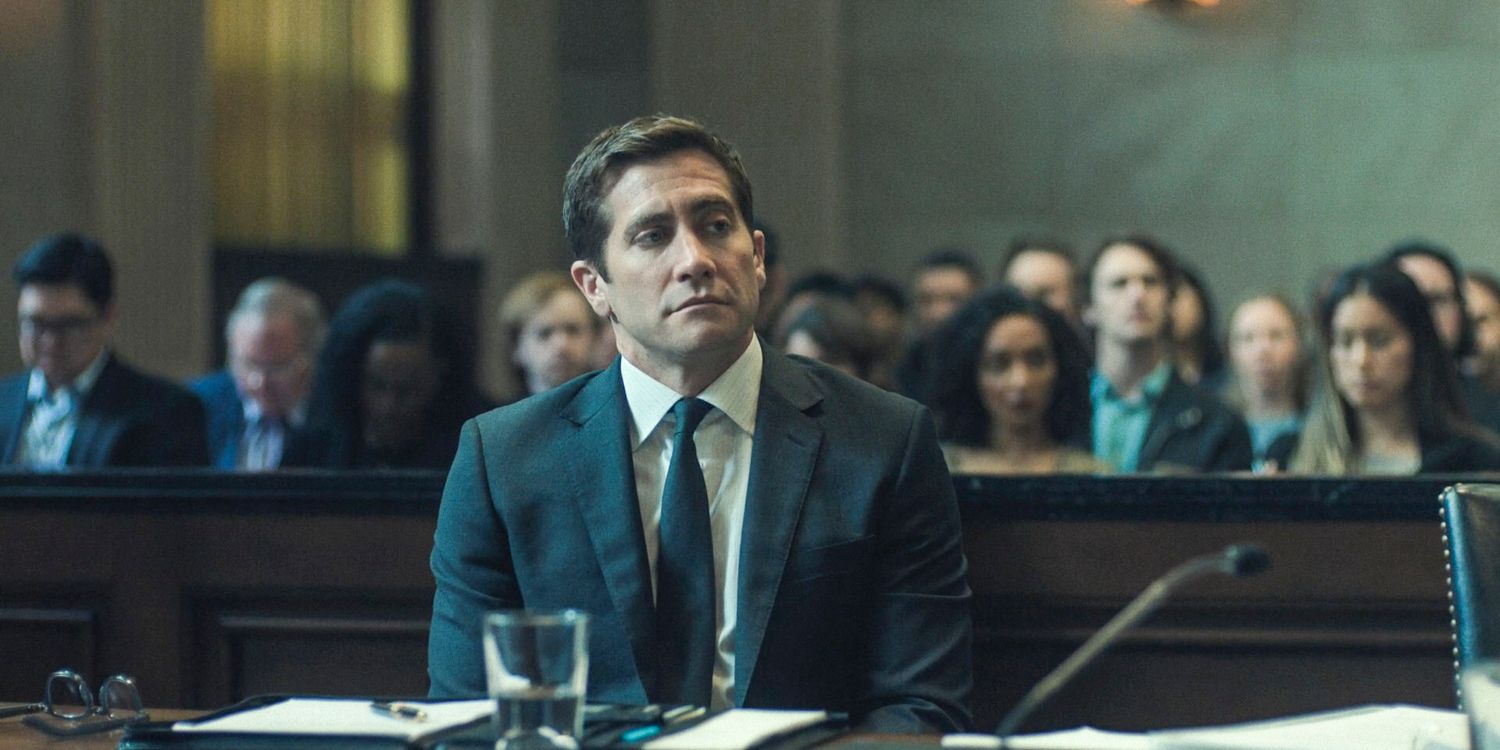
No, my pick has to be Presumed Innocent since the ways in which it’s a bad TV show are very entertaining and not horrifying or disappointing at all. First of all, it’s about a Chicago prosecutor who gets accused of murder and then defended by every single woman of color in the cast. Jake Gyllenhaal is really going for it in this performance, but the script is written in a way that just makes him come off like a Tim Robinson character, yelling things like “I’M NOT A LIAR. I lied about the affair, but......like, only that!”
I mean he literally says this in the second episode: “I will be arrested. I mean, they're going through my phone and my computer right now and they're gonna see that I was obsessed with her. I mean, I was...I was basically stalking her, you know? I mean...the breakup wasn't good.” HE SAYS THAT TO HIS WIFE ABOUT THE WOMAN HE WAS HAVING AN AFFAIR WITH.
The ending of the show is also hilariously bonkers, as SPOILERS: it turns out that Gyllenhaal’s character didn’t actually commit the murder, he just covered it up because he thought his wife did it out of anger when she found out the affair had continued. But double plot twist: it was actually his daughter, for the exact same reason. And then they decide to never talk about it again.
It is so silly, no notes.
Verdict: Presumed Innocent